

When Theory Becomes Policy - Structural Adjustment Programmes: Part 1
From theory to policy - how ideas are never neutral

Throughout the 1980’s, the Global North engaged in one of the biggest sustained peacetime plunders of money, labour and resources from the Global South since the British Empire.
They did this through Structural Adjustment Programmes (SAPs), a series of policies which are crucial as a living, breathing example of how economics is not neutral or innocuous.
They show us how its not just a bunch of ideas scribbled on the back of a fag packet.
SAPs are a crucial material milestone in the development of modern neoliberal thinking and policies.
They show us the damage that is done when politics, economics and neo-imperialism converge.
Neoliberalism is not a law of nature, it’s not universal, it is a deliberate political choice for the benefit of a select few.
This series sets out to show you how and why it matters today.
The Origin of SAPs
SAPs can trace their ideological lineage back to the Second World War with Chief Ghoul Friedrich Von Hayek and his work - “The Road To Serfdom”.
Here he argues against the tyranny of government stating “The more the state ‘plans,’ the more difficult planning becomes for the individual”.
I suspect you’ve probably heard some version of that one before.
He argues that fascism stems from giving states too much power - defined in this case by central economic planning and the reduction of individual liberty in favour of more state power.
If the State should not intervene, Hayek believed that the market is a more efficient information system, akin to a naturally occurring network.
Ever the technocrats, these guys would rather give parts of their freedom up to what is basically an algorithm than give it to other people.
This is the basis for the idea of the inefficient state and in Hayek’s view, states exist to maintain the rule of law and the necessary conditions for the market to operate unimpeded.
Fast forward a couple of decades to Ultimate Ghoul Milton Friedman and the famous Chicago School of Economics.
Friedman took Hayek’s abstractions and grounded them in policy proscriptions in the form of:
Strict limits on government spending
Monetary control of inflation
Government should not be involved in price controls in any way - leave this to the market
Privatisation of state owned enterprises
Capital and goods should be able to move freely throughout the world to ensure maximum competition
Supported by his belief that “Underlying most arguments against the free market is a lack of belief in freedom itself”, Friedman was influential on Ronald Raegan and was associated with “Raegonomics” in the 1980’s.
Material conditions in the global economy had shifted key government and institutional thinking away from classical Keynesian economics and closer to Friedmans way of thinking.
However, like any newly formed idea, in order for you to go from the fag packet to the lives of millions, you need the material conditions to give you the opportunity, and the debt crisis of the 1980’s did exactly that.
Never Let a Good Crisis Go to Waste
The 1980’s was a tumultuous time for financial and global markets.
The dollar, now the global reserve currency - the one that all countries hold quantities of and use for trade - had spiked in value, commodity prices crashed - that is natural resources like copper and tin, consumer goods like cocoa and coffee - and the price of oil declined significantly.
Much of the Global South were dependent on a single or a small handful of these commodities to generate trade revenue, so they were particularly susceptible to these kinds of shocks.
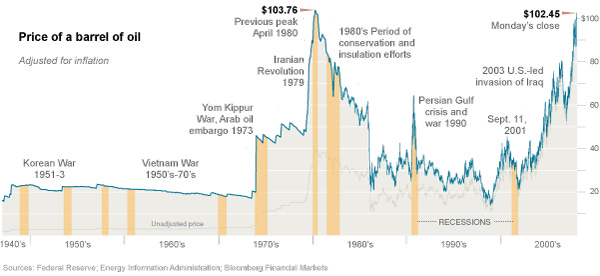
This put countries recovering from the damaging rush of decolonisation after WW2 in huge amounts of debt.
According to Debt Justice “The Congo gained independence in 1960 as Zaire, but was forced to take on the [$120 million] debt accrued by Belgium, paying for the costs of its own past exploitation”.
The Global North had downed tools and bailed out of their former colonies with little interest in stability once they had gone.
In their wake, many countries tried to pursue nationalist and socialist policies in an attempt to build better lives for their own people on their own terms - Jason Hickel states that the average income in the South grew by 3.2% per year during the 60s and 70s.
The debt crisis put a serious spanner in the works.
But never fear, the World Bank and the IMF, relics of the now defunct Bretton Woods system and heavily influenced by the superpowers of the Global North, stepped in to fill the void.
Leveraging Global Inequality
In the shadow of colonialism, with the power and financial imbalance already hugely favouring the Global North, the IMF and the World bank effectively forced a menu of ten core policy adoptions. Countries were to adopt these policies, or go without.
This became known as the Washington Consensus and contained the following:
Fiscal discipline (reducing budget deficits)
Reordering public expenditure (focusing on pro‑growth and pro‑poor areas)
Tax reform (broadening the tax base)
Liberalising interest rates (give up state control and let the market do it)
A competitive exchange rate
Trade liberalisation
Liberalisation of inward foreign direct investment (FDI for short, this is ensuring that surplus capital from the Global North can flow freely into the Global South)
Privatisation of state‑owned enterprises
Deregulation (particularly in finance)
Secure property rights
Here we can see Hayek’s ideas come to life.
These policies were often sold in a very technocratic way, referring to the oil crisis as causing “disequilibria” or having “room to manoeuvre” and frames wellbeing as “human capital” that must be “protected” for “sustainable economic growth”.
As is often the case with economics, it is marketed in a very neutral way, however, the impact on human wellbeing was very real.
The scale of this rollout was huge. From 1978 to 1992, around 90 countries in the Global South were subjected to SAPs.
These policies stripped the Global South of much of their economic and political sovereignty. It removed their ability to direct their own affairs their way, on their own terms, for the benefit of their own people. In direct contradiction to Friedman and Hayek’s view of individual freedom.
Apparently, giving up your freedom to central planning is wrong, but giving it up to a bunch of suits from the IMF and the World Bank is acceptable.
From Idea to Disaster
The academic consensus on SAPs is clear, they were an unequivocal disaster for the Global South, but a boon for the Global North.
According to Walden Bello, Between 1984 and 1990 $178 billion of capital went North. This represents one of the biggest sustained peacetime transfers of wealth in global history.
Throughout Africa - one of the hardest hit continents - per capita incomes decreased by 12.5%, the number of underweight children increased by 16 million.
In Latin America, Per Pinstrup-Andersen estimates that per capita income dropped 9.1% and poverty increased from 25% in 1980 to 30% by 1990.
Those income growth rates that were looking good pre SAPs, Jason Hickel estimates were down to an average of 0.7% in the 80s and 90s.
He goes on to say “The real per capita income gap between the global North and the global South is four times larger today than it was the end of colonialism”.
One of the hardest things to quantify, which academics and governments have struggled with since SAPs, is understanding not just the immediate damage done but the gains lost by the reversal of socialist and nationalist policies when SAPs were implemented.
This is huge.
This is the power of ideas.
Structural Adjustment Programmes show us how abstract thinking that exists originally in books and academic journals, grow over time to become chains around people’s wrists.
Ideas - once made tangible by think tanks and politics - have the power to strip sovereignty, to strip dignity and to strip wellbeing away from very real people, people who have very few channels to fight back.
Up next: A Case Study of SAPs in Latin America - Mexico.
This 5 part series will cover
Part 1: From theory to policy - how ideas are never neutral
Part 2: SAPs in action - A case study from Latin America
Part 3: SAPs in action - A case study from Sub Saharan Africa
Part 4: SAPs in action - A case study from South East Asia
Part 5: The Legacy of SAPs - How SAPs cemented an ideology
Follow me on YouTube - Instagram - TikTok
Great article, I look forward to more!
<3
Small typo in the 6th paragraph under the "Never let a good crisis go to waste" section; with became will, which makes the sentence harder to parse.