

The Problem With Green Capitalism
Decentralised Technology, Centralised Power

I have just recently had a smart meter, solar panels, a battery, and a heat pump installed, and the setup involved is quite faffy1.
Thatcher liberalised our energy so prices are dictated via an exchange platform based on supply and demand, resulting in prices changing every 30 minutes, so there are 48 different prices each day. I can now take advantage of these price changes.
There are “peak” times and “off-peak” times.
The exact price at any given time is determined by “marginal cost”. This means everyone gets paid what it costs the last producer needed to meet demand to generate 1 additional unit of power. This is usually gas, as that’s the most reliable source of energy, and the most expensive.
Understanding all this led me down the rabbit hole of our energy landscape, and why it’s up to me as the individual to manage all this.
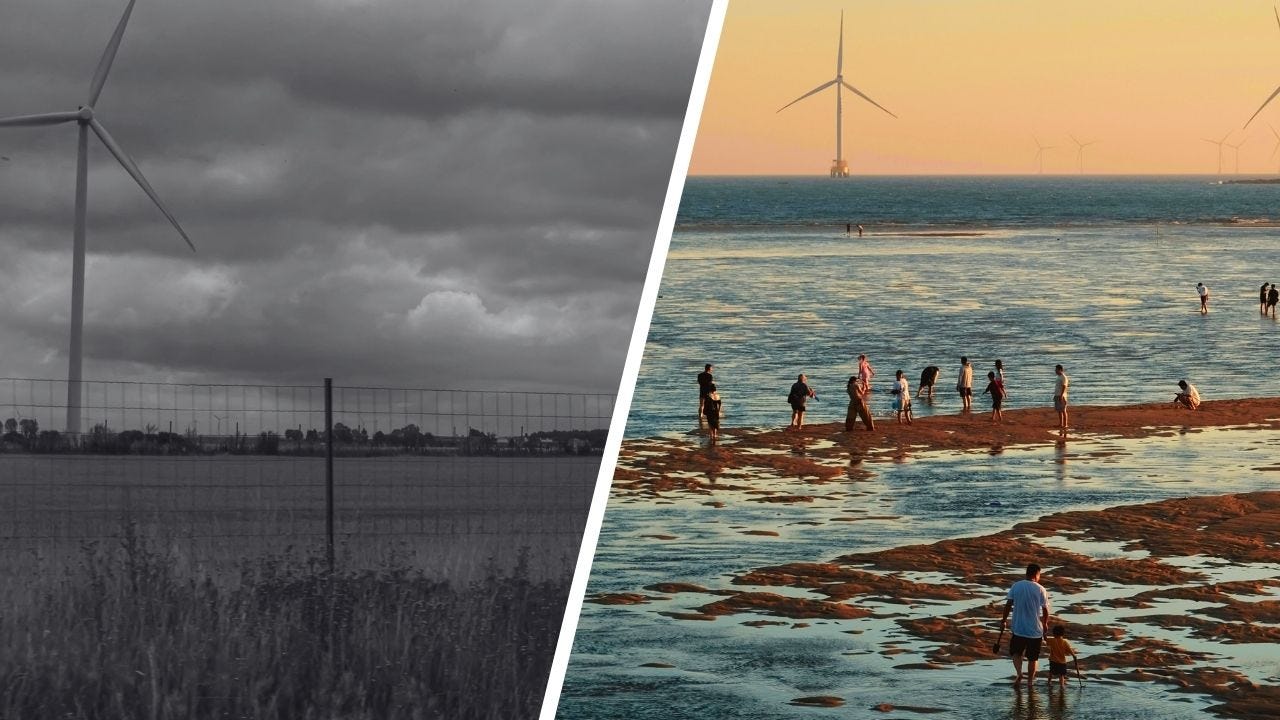
This is because under capitalism, we are bound by extractive, highly centralised, individualistic and top-down models of production and ownership. This is at odds with a technology that can be localised and democratised.
An IPCC report in 2022 claimed that:
Greater public participation in climate policy processes and governance, by increasing the diversity of ideas and stakeholders, builds resilience and allows broader societal transformation towards systemic change, even in complex, dynamic and contested contexts.2
To transition away from fossil fuels, public participation is key. The profit motive is not sufficient in bringing about the wide-scale change we need. We have to challenge the underlying structures that reproduce capitalist modes of production and ownership. The IPCC reports continue to say:
Local initiatives … can lead to improvements in energy efficiency, ensure a decent standard of living and increase renewable energy uptake, while building on existing social trust, and, in turn, building social trust and initiating engagement, capacity building, and social capital formation.3
Energy Democracy
Energy Democracy (ED) is described as “implementing a low-carbon transition that changes both the socio-economic and the political structures of our energy systems4”, and it emerged as a response to the dominance of large energy companies.
ED follows 4 key tenets: democratisation and participation, property, surplus value production and employment, ecology and sufficiency.
These tenets ensure that people directly affected should hold decision-making power, municipal ownership or collective private ownership/cooperatives, local value capture, local investment, decentralised jobs and energy based on local need rather than profit maximisation beyond growth imperatives.
A Tale of Two Models: Ecotricity
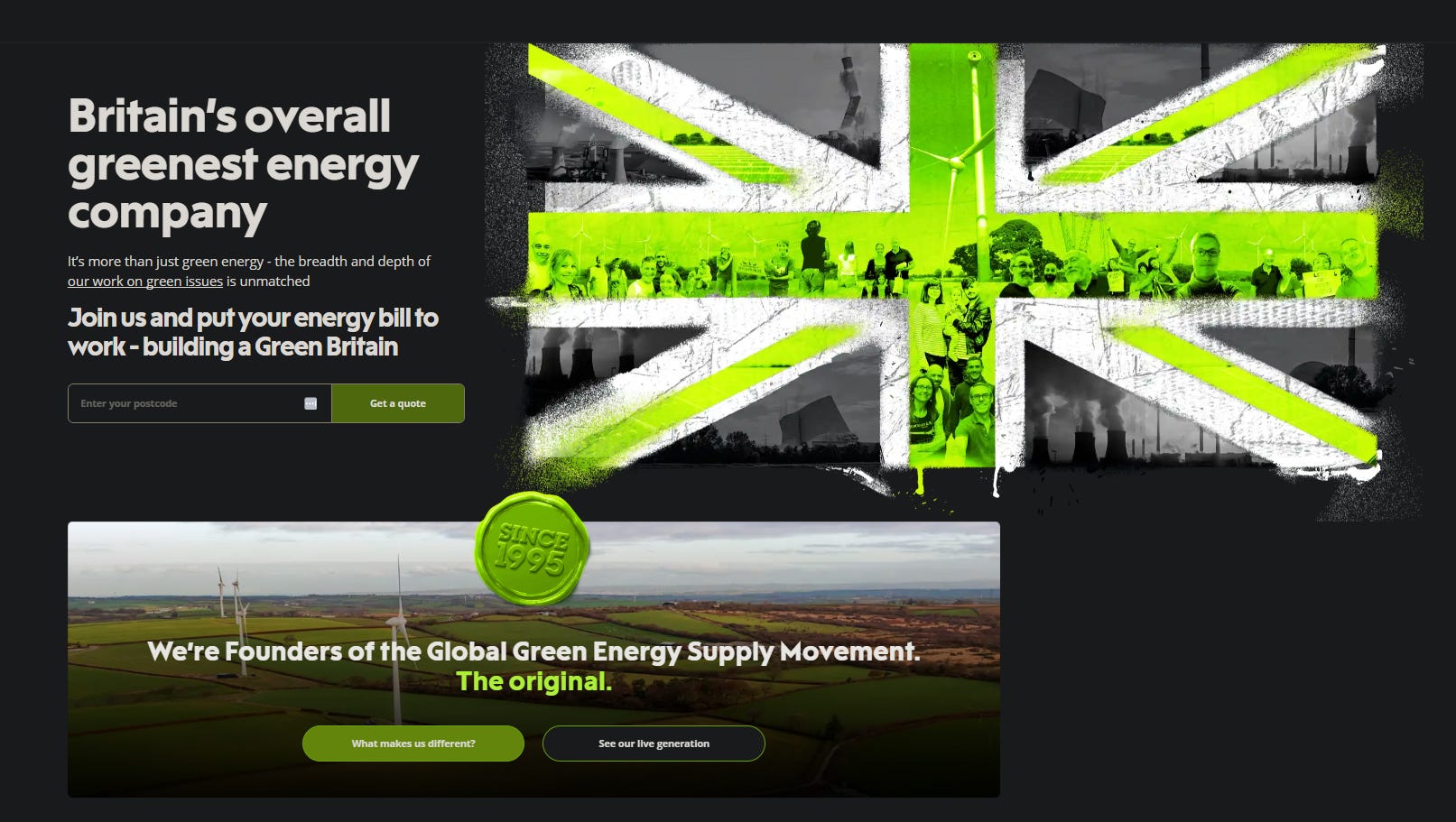
Ecotricity’s founder, Dale Vince, claimed on a podcast with Novara Media that Ecotricity doesn’t pay dividends and doesn’t have shareholders; he explicitly stated that he makes all the decisions and shareholders are antithetical to that. Whilst Ecotricity is privately owned rather than shareholder-owned, Vince himself has become extremely wealthy through the company’s growth.
I have entered the market as a direct competitor to Ecotricity because I produce my own energy. Of course, Ecotricity is unlikely to incentivise me; they only want consumers in order to monopolise production.
This results in a need to unilaterally protect your own material interests, or those of your company, as evidenced by the backlash against the government, of which he has donated up to £6m, in their support for heat pumps.
Having invested heavily in biogas production, Vince urged the government to roll back its BUS scheme, which is £7,500 towards a heat pump. Ecotricity is influencing the government to change the market in its favour.
Renewable technology has the potential to radically decentralise and democratise energy production. Ecotricity’s model does little to change the underlying structures that are holding us back from revolutionising our relationship with energy, and subsequently the planet. While the intention is noble, and the pioneering cannot be ignored, the mechanism through which they are delivering this is actively contributing, indirectly, to the problem Ecotricity claim to want to solve.
Of the 4 keys tenets of Energy Democracy, Ecotricity doesn’t meet any of them, but it could. Currently, democratisation is not built into Ecotricity’s ownership or governance structure; ownership remains concentrated and private, the surplus is still privately controlled, communities themselves do not directly own the assets and wealth capture is not democratically distributed.
Finally, while Ecotricity strongly aligns ecologically, it is still driven by consumption growth, commodified energy markets, and profit-led investment logic.
To meet these tenets would require a fundamental restructuring of the company and the removal of supreme control from its founder.
A Tale of Two Models - Danish Energy Islands
Denmark has been pioneering ED for decades now. This has manifested in what are called “Danish Energy Islands”, namely Bornholm, Samsø and Ærø. For the purposes of this, we will focus on Samsø.
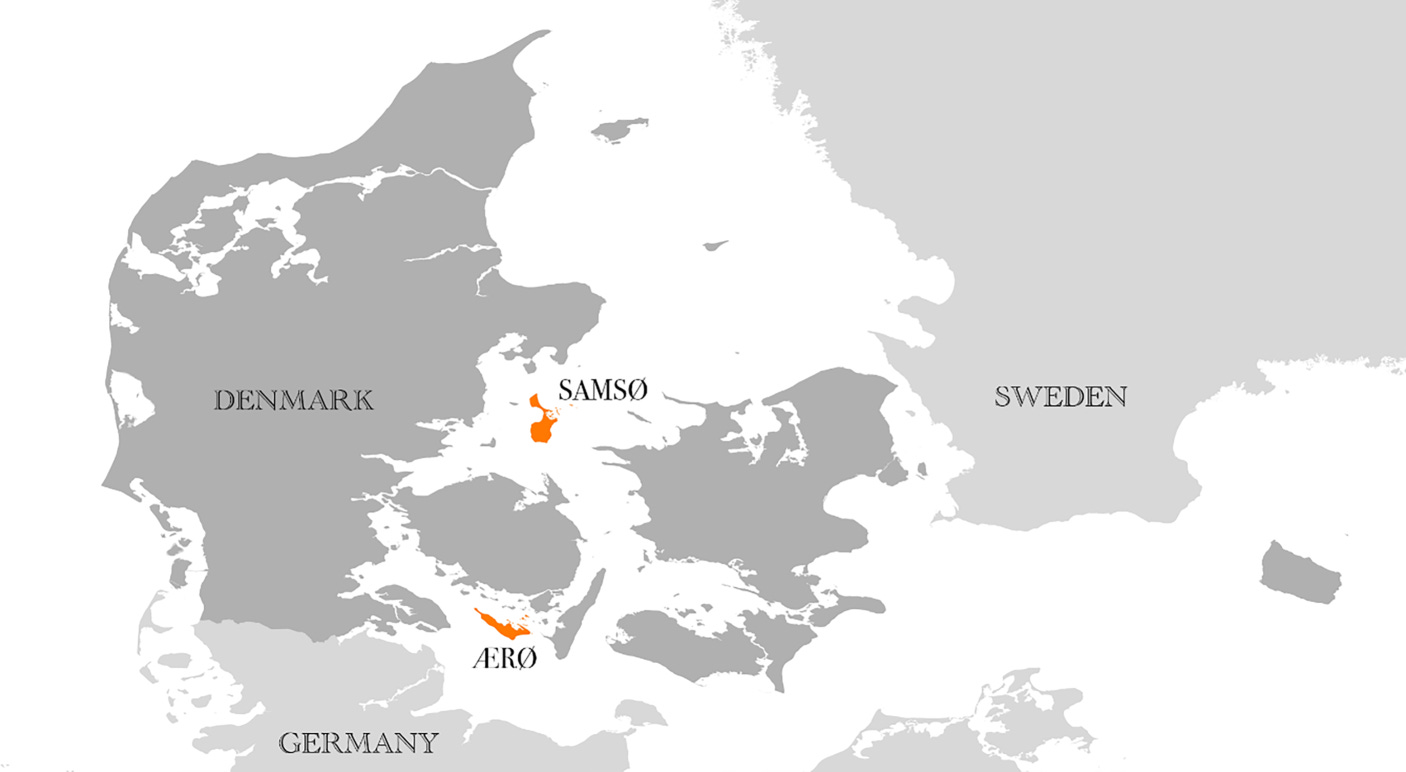
Samsø is home to 4,300 residents. The island was the first to declare its intent to rely on renewable energy for 100% of the island’s needs.
In 1997, roughly 2 years after Ecotricity was set up, Samsø Municipality set a goal to become Denmark’s renewable energy island in 10 years. By 2005, the island managed to become a net exporter of energy.
To do this, Samsø municipality built and owns five of the ten offshore wind turbines, external investors own three and local cooperatives own two. Local farmers own nine of the eleven onshore wind turbines, while two are owned by local cooperatives.5
One farmer explained during a study that he used to think that wind turbines were quite ugly. However, since owning one, he thinks differently because “every time it spins, I see the crowns coming to my bank account”.6
The islanders also created the Samsø Energy Academy. Financed by profits from the two offshore wind turbines the municipality owns, it provides both the social structures and the physical space for decision-making and is the hub for local deliberative democracy.
Serving as a publicly funded forum for citizens, it encourages collaboration between formal state institutions and islanders. Through it, islanders found a collective solution for internet access, which considerably lowered costs for local households.
This structure has embedded deeper community-based democratic institutions and created a culture of cooperation and problem-solving. Most importantly, the islanders are in control. This is the power of renewable technologies
Of the 4 keys tenets of Energy Democracy, Samsø meets them all.
Community or Capitalism
In the UK, being “off grid” leaves me with few good options. I have no mechanism through which to engage in a community-driven, localised approach.
The potential to change the energy market doesn’t come from assets alone - building as many windmills as you want won’t change the structural issues. The change starts to happen when control of those assets is held democratically by consumers, such as Som Energia in Spain.
Ecotricity has shown that the upfront capital cost of building renewable infrastructure is enormous - turbines, planning permission, grid connection, land, and maintenance over decades. Samsø shows that once up and running, the cost to generate electricity is incredibly low, and the start-up costs don’t have to come from consumers who don’t have a say in production or ownership.
Ecotricity’s ownership model ultimately limits its ability to fully participate in this future, as this future relies on households, communities and regions producing their own energy locally, managed through a centrally balanced network. It starts at the household level and builds outwards. This is antithetical to Ecotricity’s model but absolutely crucial to the Samsø model.
A 2022 study of the complexities of energy transition concluded:
One-sided ways of thinking and attitudes must be overcome to meet the overall demands of energy and climate justice in terms of distribution, process and recognition. In conclusion, we therefore advocate that community energy should not be understood exclusively as bottom-up projects, but that balancing and connecting elements should be injected into communities and systems through targeted socially inclusive and exchange strategies.7
I’d love to do this full-time and not be weighed down by my corporate job, so I can read, learn and write more. You can help me do this by sharing this with your community, buying me a coffee or becoming a paid subscriber. Your contributions help to cover key subscriptions, books and articles.
YouTube
Instagram
TikTok
Link Tree
Buy me a coffee
I know, woe is me, right?
https://www.ipcc.ch/report/ar6/wg3/downloads/report/IPCC_AR6_WGIII_FullReport.pdf
Ibid.
https://link.springer.com/article/10.1007/s41358-023-00347-5#Sec3
https://archive.nordregio.org/Metameny/About-Nordregio/Journal-of-Nordregio/Journal-of-Nordregio-no-1-2011/Samso-Island-100-wind/index.html?
https://link.springer.com/article/10.1007/s41358-023-00347-5#Sec5
https://www.sciencedirect.com/science/article/pii/S2210422423000734
The Samsø example is so useful Alex, for what it could mean for a future where we don't just expand green energy, but a future where we empower local communities to have the opportunity to make local/municipal/federal democracy more significant, in this case powering their homes. Been thinking a lot about the potential of extended local democracy and governance and this is a really nice example to come back to about the options greater power to local authorities can bring.